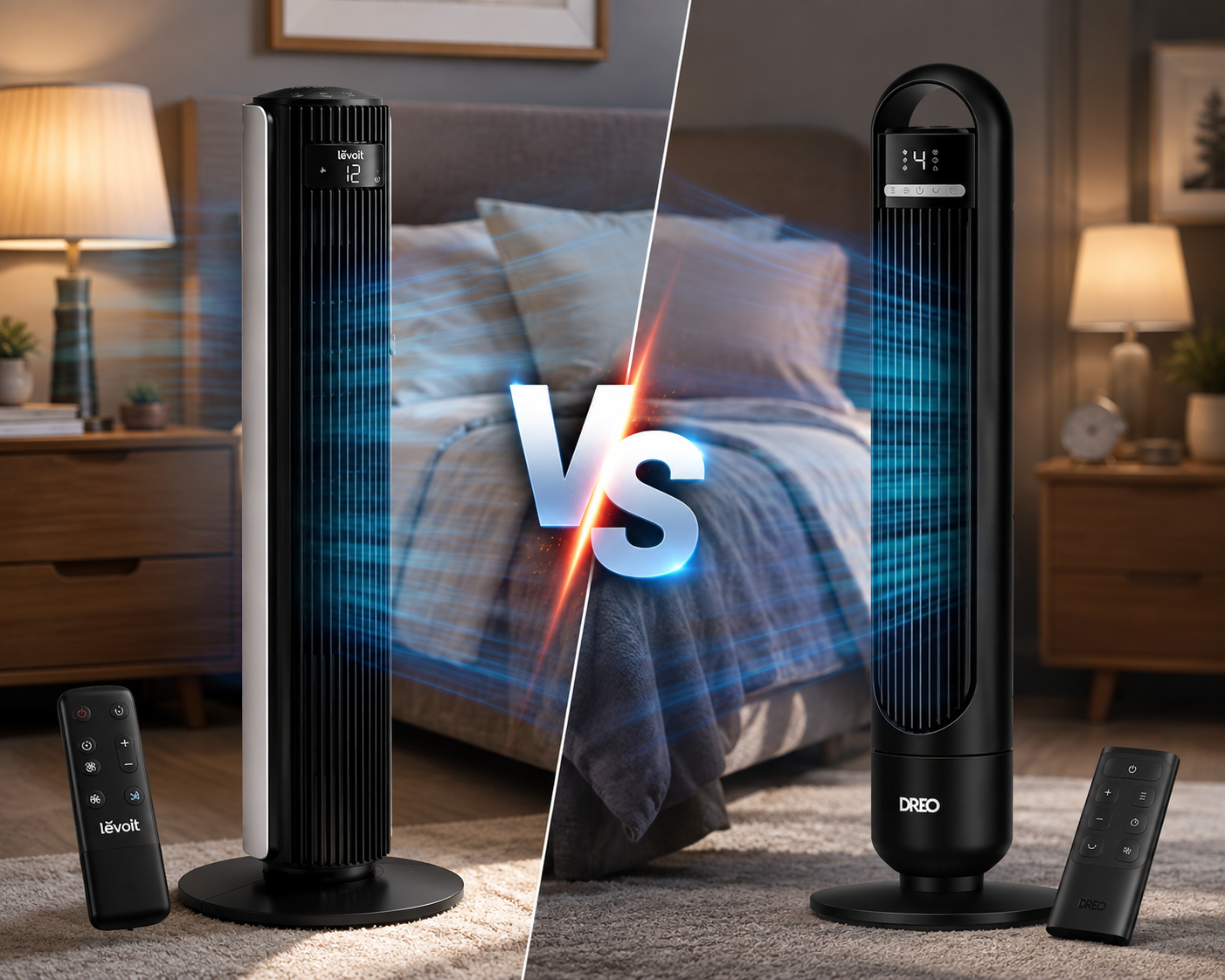
A hot, stuffy bedroom makes it uncomfortable to sleep, work or just relax. When you need better air circulation and don’t want to take up a lot of floor space, a good tower fan is a convenient solution. Two nice choices are the DREO Tower Fan and the Levoit Classic 36-Inch Tower Fan. At first sight they look very similar. Both are slim standing fans for indoor use. Both have multiple speeds, multiple operating modes, 90 degree oscillation, remote controls, timers and low noise operation suitable for bedrooms. But if you look a bit closer, important differences begin to emerge. Our comparison to the DREO model is in terms of power and customization. Rated for airflow up to 28 ft/sec, it has 8 speed settings, 4 operating modes, 90° oscillation, remote control, 8 hour timer and very quiet low speed operation. The Levoit Classic 36 takes a slightly different approach. It has a maximum airflow of up to 25 ft/s, 5 speed settings, 4 modes, 90° oscillation, 1-12 hours timer, remote control, temperature responsive operation and as low as 28dB noise.
So which one do you put by your bed?
The answer is contingent upon what you value most.
Right away, if you want more speed levels and higher advertized max air velocity, DREO looks good.
If sleep-centric automation, longer timers and silent bedroom operation are what you’re after, Levoit has some compelling advantages.
In this DREO vs Levoit tower fan comparison, we’ll look at airflow, noise, speed control, oscillation, sleep features, timers, controls, maintenance, and overall value to help you decide which fan is better for your room.
Important: Tower fans circulate room air; they don’t refrigerate the air like an air conditioner. The moving air can make you feel cooler, but a standard fan shouldn’t be expected to lower the actual room temperature like AC.
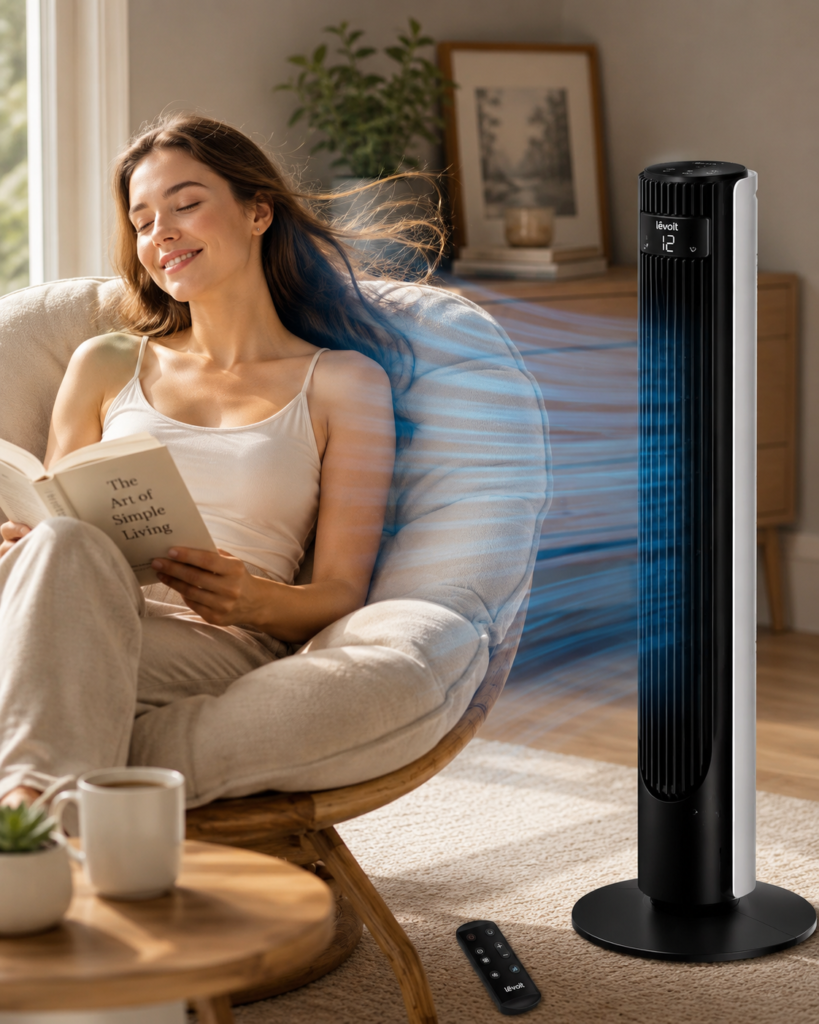
Our Top Picks at a Glance
Best Overall : DREO, Strong combination of airflow and customization.
Best Advertised Air Velocity : DREO, Up to 28 ft/s.
Best Speed Control : DREO, 8 speeds.
Best for Sleeping : Levoit, Advanced Sleep Mode.
Best for Quiet Bedrooms : Very Close, Both emphasize low-noise operation.
Best Timer : Levoit, Up to 12 hours.
Best Oscillation : Tie, Both offer 90°.
Best Remote Convenience : Tie, Both include remote operation.
Best for Small Spaces : Tie, Slim tower designs.
Best for Airflow Customization : DREO, More speed levels.
Best Automatic Comfort : Levoit, Temperature-responsive modes.
Easiest to Recommend : DREO, Strong all-around feature package.
How We Tested
1. Airflow
A tower fan needs to move enough air to make a noticeable difference.
DREO’s advertised maximum air velocity reaches 28 ft/s, while the U.S. Levoit Classic 36 is officially rated at 25 ft/s.
However, maximum velocity alone doesn’t determine how comfortable a fan will feel. Distance, oscillation, fan design, room layout, and selected speed all affect the experience.
2. Noise Level
Bedroom fans shouldn’t sound like they’re competing with your alarm clock.
We therefore gave quiet operation significant weight.
We considered minimum advertised noise, sleep-oriented settings, speed adjustment, and how each fan is designed for nighttime operation.
3. Speed Control
More speed settings make it easier to find a comfortable middle ground.
DREO offers 8 speeds, while the Levoit Classic 36 offers 5 speeds.
DREO therefore has the advantage on paper for fine airflow adjustment.
DREO vs Levoit Tower Fan Comparison Table
| Feature | DREO Tower Fan | Levoit Classic 36 |
|---|---|---|
| Fan Type | Tower/Floor Fan | Tower/Floor Fan |
| Best For | Airflow customization | Quiet bedroom comfort |
| Max Advertised Air Velocity | 28 ft/s | 25 ft/s |
| Speed Settings | 8 | 5 |
| Modes | 4 | 4 |
| Modes Include | Normal, Natural, Sleep, Auto | Normal, Turbo, Auto, Advanced Sleep |
| Minimum Noise Claim | Ultra-quiet operation | 28dB |
| Oscillation | 90° | 90° |
| Timer | Up to 8 hours | Up to 12 hours |
| Remote Control | ✅ Yes | ✅ Yes |
| Touch Controls | ✅ Yes | ✅ Yes |
| Sleep Mode | ✅ Yes | ✅ Advanced Sleep |
| Auto Mode | ✅ Yes | ✅ Yes |
| Temperature Responsive | Model features apply | ✅ Selected modes |
| Removable/Washable Rear Access | ✅ Yes | ✅ Yes |
| Bedroom Friendly | ⭐ Excellent | ⭐ Excellent |
| Small-Space Friendly | ✅ Yes | ✅ Yes |
| Main Advantage | 8 speeds + 28 ft/s airflow | Sleep features + 12H timer |
| Preliminary Rating | ⭐ 4.8/5 | ⭐ 4.7/5 |
| Early Verdict | 🏆 Best Overall | 🥈 Best for Sleep-Focused Use |
1. DREO Tower Fan Review — Powerful Airflow With More Control
Best for: Strong Airflow, 8-Speed Customization & Bedroom Use
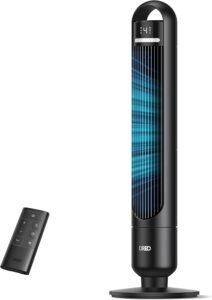
Dreo Tower Fan for Bedroom – Review
- Powerful 28 ft/s airflow
- Eight speed settings
- Quiet DC motor design
- Wide 90° oscillation
- Slim profile saves space
- Doesn't replace air conditioning
- Tall design requires floor space
- More settings than basic fans
What We Like About the DREO Tower Fan
28 ft/s Maximum Air Velocity : Strong advertised airflow for a slim tower fan.
Eight Speed Settings : The standout feature for buyers who want precise control.
Ultra-Quiet Low-Speed Operation : Excellent for bedrooms, studying and working.
Dedicated Sleep Mode : Makes nighttime use more practical.
Where the DREO Falls Short
It Doesn’t Actually Refrigerate the Air
Despite marketing language around “cooling,” this is still a fan.
It moves air to make you feel cooler; it doesn’t replace an air conditioner.
Eight Speeds May Be More Than Some Buyers Need
If you normally use only Low and High, the extra adjustment levels may not add much value.
Who Should Skip the DREO?
Consider another product if:
- You specifically need an appliance that reduces room temperature—you need air conditioning rather than a standard fan.
- You want a fan with extensive vertical tilt adjustment.
- You only need a basic two- or three-speed fan.
- You want a timer longer than eight hours.
- You prefer the simplest possible controls with very few modes or settings.
2. Levoit Tower Fan Review — Quiet Bedroom Comfort With Advanced Sleep Features
Best for: Quiet Sleeping, Automatic Comfort & Nighttime Use
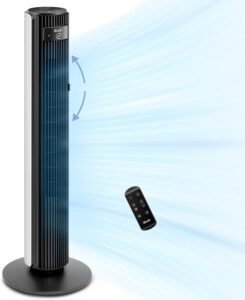
LEVOIT Tower Fan for Bedroom, 36-Inch Quiet Bladeless Fan - Review
- Quiet 28dB operation
- Strong 28 ft/s airflow
- Wide 90° oscillation
- Built-in temperature sensor
- Remote and 12-hour timer
- Doesn't refrigerate room air
- Only five speed levels
- Requires available floor space
- White finish may show dirt
What We Like About the Levoit Tower Fan
28dB Minimum Noise : Excellent for bedrooms and quiet spaces.
Advanced Sleep Mode : One of the strongest sleep-focused features in this comparison.
Temperature Sensor : Automatically adjusts fan speed in supported modes.
12-Hour Timer : Longer and more flexible than DREO’s eight-hour timer.
Where the Levoit Falls Short
Lower Maximum Air Velocity Than DREO
Levoit reaches 25 ft/s, compared with DREO’s 28 ft/s.
Fewer Speed Settings
Five speeds are useful, but DREO gives you eight.
Who Should Skip the Levoit?
Consider DREO or another model if:
- You prioritize maximum advertised airflow
- You want more than five speed levels
- You prefer very fine manual adjustment
- You don’t need automatic modes or sleep features
- You want an actual cooling appliance rather than a fan
Who Should Buy Which? — DREO vs Levoit Tower Fan
Choosing between the DREO Tower Fan and the Levoit Classic 36-Inch Tower Fan becomes much easier once you stop looking only at specifications and start thinking about how you’ll actually use the fan.
Both are strong bedroom-friendly options, but they suit different types of buyers.
DREO is the better fit if you want:
More airflow • more speed levels • stronger manual control • all-day flexibility
Levoit is the better fit if you want:
Quiet sleeping • automatic comfort • Advanced Sleep Mode • longer timer
Buy the DREO Tower Fan If You Want Stronger Airflow-
Best for: Hot Bedrooms
DREO is the better choice if your room often feels warm, stuffy, or poorly ventilated.
Its advertised maximum air velocity of 28 ft/s gives it an advantage over the Levoit Classic 36’s lower maximum airflow specification.
This can be useful when:
- Your bedroom gets hot during the afternoon
- You want stronger airflow from across the room
- You use the fan alongside an air conditioner
- You need more noticeable air movement
- You want the fan for both daytime and nighttime use
Recommendation: Choose DREO if airflow strength is one of your top priorities.
Buy the DREO If You Like Fine Speed Control-
Best for: Buyers Who Frequently Adjust Fan Speed
DREO gives you eight speed settings.
That’s one of the biggest differences between these two fans.
Eight levels let you make smaller adjustments instead of jumping between only a few settings.
You can move gradually from:
Very gentle airflow → light breeze → medium airflow → strong circulation
That makes DREO especially useful if your comfort needs change throughout the day.
Best For:
- People sensitive to strong airflow
- Buyers who frequently change fan settings
- Bedrooms that change temperature throughout the day
- Users who like manual control
Recommendation: Choose DREO if customization matters more than automation.
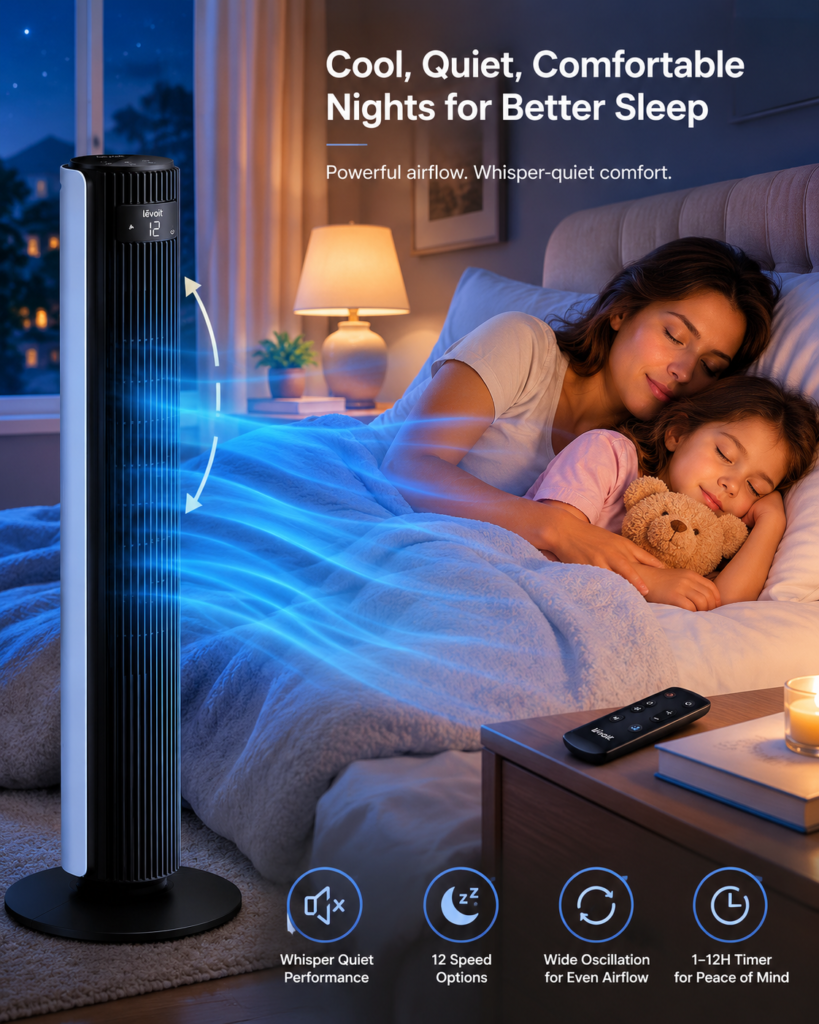
Buy the Levoit If You’re a Light Sleeper-
Best for: Quiet Nighttime Use
If fan noise easily wakes you up, the Levoit Classic 36 is one of the stronger choices in this comparison.
Its quiet low-speed operation works alongside Advanced Sleep Mode, which is designed specifically for overnight use.
Instead of relying only on one fixed speed, Levoit can adjust its behavior during the night.
This makes it attractive for:
- Light sleepers
- People who dislike constant fan noise
- Parents with sleeping children
- Couples with different sleep schedules
- People who prefer a darker, quieter bedroom
Recommendation: Choose Levoit if sleep comfort is more important than maximum airflow.
Buy the Levoit If You Want Automatic Nighttime Comfort-
Best for: Set-It-and-Forget-It Use
Not everyone wants to keep reaching for a remote.
Levoit’s temperature-responsive operation gives it an advantage if you prefer the fan to make more adjustments for you.
The fan can respond to changing room conditions in supported automatic modes.
That means:
Warmer room → more airflow
Cooler room → less airflow
This is especially helpful overnight.
Choose DREO If…
The DREO Tower Fan is the better choice if you want maximum flexibility from one fan.
Choose it if you:
- Want up to 28 ft/s airflow
- Prefer eight speed settings
- Regularly adjust fan intensity
- Need stronger daytime circulation
- Have a hot or stuffy bedroom
- Work from home
- Use the fan throughout the day
- Want both quiet low speeds and stronger high speeds
- Use a fan with air conditioning
- Prefer manual customization
Best For: Strong airflow + speed customization + hot rooms + all-day use
Choose Levoit If…
The Levoit Classic 36 is the better choice if bedroom comfort is your main goal.
Choose it if you:
- Are a light sleeper
- Mainly use a fan at night
- Want Advanced Sleep Mode
- Prefer automatic temperature-responsive settings
- Want a longer timer
- Share a bedroom
- Live in an apartment
- Want fewer manual adjustments
- Prefer quieter nighttime operation
Best For: Sleeping + quiet bedrooms + couples + automatic comfort
How to Choose the Right Tower Fan
It sounds simple to purchase a tower fan until you start comparing the models. One fan ensures a higher airflow. Another points to ultra-quiet operation. Some have eight or more speeds, while others concentrate on automatic modes, timers, remote controls or easier cleaning. The best tower fan isn’t always the one with the longest feature list. It’s the one that works where you want it, when you want it, and how you want it. In a bedroom, quiet operation might be more important than maximum airflow. More speed settings and more powerful airflow might be more useful for a hot home office. And if you’re a light sleeper, sleep mode and timer controls might be your top priorities.
1. Check the Airflow & Air Velocity
Why It Matters
The first job of any tower fan is simple: move air effectively.
A weak fan may feel fine when you’re sitting directly beside it but become much less useful when placed across a bedroom.
When comparing models, look at manufacturer specifications related to:
- Air velocity
- Airflow
- Air outlet design
- Maximum fan speed
- Effective air reach
- Oscillation coverage
2. Pay Attention to Noise Level
Why It Matters
Noise can turn an otherwise excellent tower fan into a frustrating bedroom appliance.
If you plan to run the fan while:
Sleeping • studying • working • reading • watching TV
quiet operation should be high on your checklist.
Manufacturers often provide noise ratings in decibels (dB).
A lower advertised number generally indicates quieter operation under the conditions used for that rating.
But there’s an important detail buyers sometimes miss.
For Light Sleepers
Look for a fan that combines:
Low noise + gentle low speeds + Sleep Mode + display dimming/off + timer
This combination matters more than simply having a powerful motor.
Buying Tip: If the fan will sit beside your bed, prioritize quiet low-speed performance over maximum airflow.
3. Look at Oscillation & Room Coverage
Why Oscillation Matters
A stationary fan sends airflow in one direction.
That’s fine if only one person needs the breeze.
But it becomes less useful when you’re trying to circulate air across a larger area.
Oscillation allows the fan to move from side to side.
That makes it especially valuable for:
- Couples
- Shared bedrooms
- Living rooms
- Home offices
- Family spaces
- Larger rooms
Both DREO and Levoit in our comparison offer 90° oscillation, which is a useful range for typical bedroom use.
Frequently Asked Questions About DREO vs Levoit Tower Fans
1. Which Is Better: DREO or Levoit Tower Fan?
Quick Answer: DREO Overall, Levoit for Sleeping
For most buyers in this comparison, we give the DREO Tower Fan a narrow overall advantage.
DREO stands out because of its combination of:
- Up to 28 ft/s maximum air velocity
- 8 speed settings
- 4 operating modes
- 90° oscillation
- Quiet low-speed operation
- Sleep Mode
- Auto Mode
- Remote control
- 8-hour timer
2. Which Tower Fan Is Quieter for Sleeping: DREO or Levoit?
Quick Answer: Both Are Quiet, but They Excel in Different Ways
The DREO configuration in this comparison has a lower advertised minimum noise figure, while Levoit is rated as low as 28dB.
But you shouldn’t choose based only on the lowest decibel number.
Minimum noise ratings normally represent the fan operating under its quietest conditions. When you increase the speed, airflow becomes more audible.
For sleeping, Levoit has another important advantage: Advanced Sleep Mode.
Its sleep-focused operation is designed to reduce nighttime disturbances and make automatic adjustments based on changing conditions.
DREO, meanwhile, gives you eight speeds, making it easier to manually find a precise balance between airflow and noise.
Choose DREO If:
You want very quiet low-speed operation with more manual control.
Choose Levoit If:
You want quiet operation combined with stronger sleep automation.
3. Can You Leave a Tower Fan Running Overnight?
Quick Answer: Many tower fans are designed for extended bedroom use, but always follow the manufacturer’s operating and safety instructions.
Both models in this comparison include features specifically useful for nighttime operation.
DREO provides:
Sleep Mode + quiet low speeds + remote control + 8-hour timer
Levoit provides:
Advanced Sleep Mode + quiet operation + remote control + temperature-responsive settings + up to a 12-hour timer
The timer is particularly useful if you don’t want the fan operating continuously until morning.
Final Verdict — DREO vs Levoit Tower Fan
Why DREO Wins Overall
DREO doesn’t win because of one specification alone.
It wins because its features work well across more situations.
1. Stronger Maximum Airflow
The DREO configuration in our comparison reaches an advertised maximum air velocity of 28 ft/s.
That’s useful when you need a noticeable breeze during hotter parts of the day.
2. Eight Speed Settings
This may be DREO’s biggest practical advantage.
Eight speeds let you choose a more precise airflow level instead of being limited to only a few large steps.
That means one fan can comfortably handle:
Sleeping → reading → working → relaxing → hot afternoons
3. Quiet Low-Speed Operation
DREO isn’t simply about power.
Its low advertised minimum noise level means you can reduce the speed and use it in quieter environments.
That’s important because a bedroom fan needs to perform at both ends of the range:
Quiet when you’re sleeping.
Powerful when you’re hot.
DREO vs Levoit Tower Fan
Overall Winner: DREO Tower Fan — 4.8/5
For most buyers, DREO is the tower fan we’d choose. Its combination of 28 ft/s maximum airflow, eight speed settings, quiet low-speed operation, 90° oscillation, multiple modes, remote control, and easy maintenance gives it an excellent balance between power and comfort.
It’s especially easy to recommend if you want one fan that can handle both hot afternoons and quiet nights.